
What type of person are you? The kind that likes to map out their daily lives and breaks it down into order by importance, or the opposite, the type that goes with the flow and likes a more relaxed schedule? The difference between these two types of organization/ structure can be defined by either taxonomy or folksonomy. Taxonomy, in essence, is a method of classification that is organized by dividing larger ideas or tasks into smaller, simpler categories. On the other hand, folksonomy is a network of ideas and tasks that are collected together, in no specific structure. Ideally, to display these different forms, it is necessary to identify the appropriate classifications that will be displayed by each different organizer. To recreate a taxonomy structure, it is ideal to highlight the larger topics and then break them down into simpler categories that are more detailed. For a folksonomy structure, the big idea is not broken down but added to with a variety of selections that pertain to the main topic. In reality, no tools are needed to create either form, but it is empirical to understand the material being organized, thus each organizational method can be utilized to its full capacity.
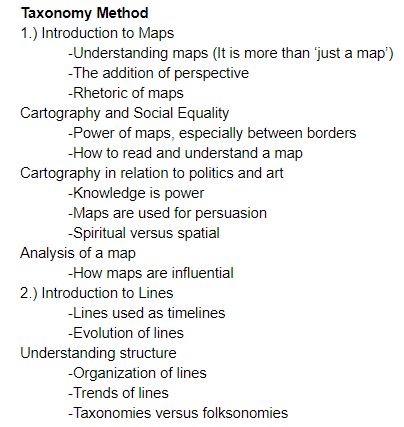
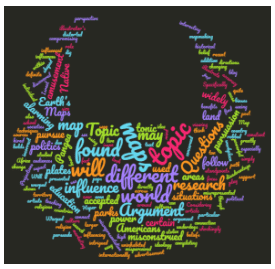
In the experiment conducted above, I demonstrated the difference between a taxonomy versus the folksonomy organizational methods. To further explain, I first began by taking the information I received in my English course and organized it by the main topics discussed in each module. Then, I broke them down into simpler categories based on the information that I received from each module. In essence, this organizational method was strictly focused on a weekly schedule and the review of each individual topic. By the end, the taxonomy method looks representative of a tree. On the other hand, to design the folksonomy diagram, I took multiple blog posts, as well as adding in vocabulary from other quizzes and assignments. I then was able to plug this information into a word bank generator that created a diagram that represented a cloud. From this, I was able to see the big picture that my professor was trying to familiarize us with. Overall, the folksonomy and taxonomy methods work hand in hand with each other. It was significantly more difficult to recall all of the individual assignments and topics that were covered in the taxonomy method. In support of the folksonomy method, the word cloud allowed me to see an ariel view of everything that I had discussed, thought and noticed about the concepts that I had analyzed.
Personally, I liked the folksonomy diagram. To support my opinion, I felt that the folksonomy method was very appealing to the eye and allowed me to not only focus on the overall learning lesson but also reflect on previous assignments. I felt that this diagram allowed me to better understand the purpose of giving my best effort, and allowed me to appreciate the journey that will lead to the next concepts being discussed. From this experiment, I have a greater appreciation for observation and critical analysis. From now on, I will utilize the folksonomy method in my daily life, especially when I face times of stress. I will force myself to understand the end goal, instead of focusing on the individual obstacles that can stand in my way.
 A Healthy Relationship